
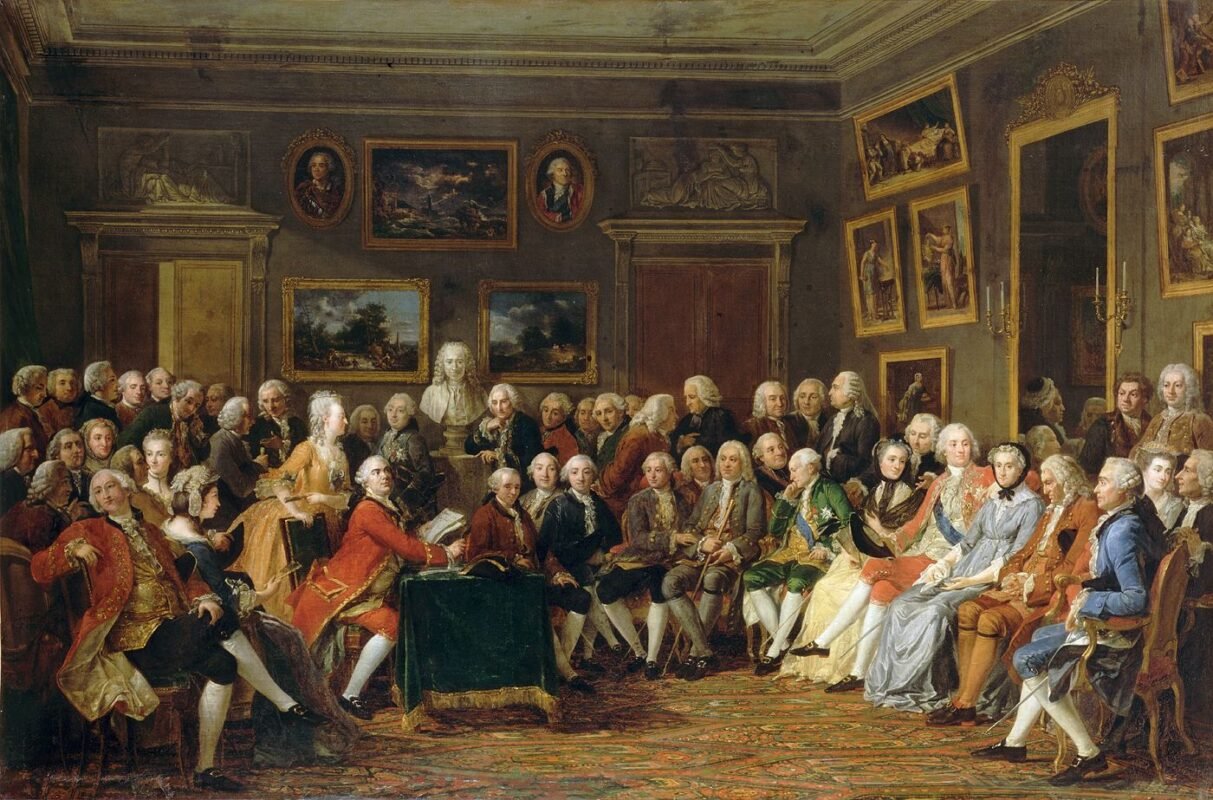
The Enlightenment Movement and the Birth of the Bavarian Illuminati
Introduction
The Enlightenment was one of the most influential intellectual movements in world history. Emerging during the late seventeenth and eighteenth centuries, it transformed how people thought about science, education, government, religion, philosophy, and human rights. Rather than accepting ideas solely because of tradition or authority, Enlightenment thinkers encouraged observation, reason, debate, and the pursuit of knowledge.
Within this historical setting, the Bavarian Illuminati was founded on May 1, 1776, by Adam Weishaupt in Ingolstadt, Bavaria. Although the organization existed for less than a decade, it has become one of history’s most recognized secret societies.
Modern discussions often connect the Illuminati with conspiracy theories and fictional stories. However, understanding its historical origins requires examining the broader intellectual environment that shaped its creation. The Bavarian Illuminati emerged during the Enlightenment, and many of its documented objectives reflected the values of that period.
This article explores the Enlightenment Movement, the social and political conditions of eighteenth-century Europe, the life of Adam Weishaupt, the founding of the Bavarian Illuminati, and the historical relationship between Enlightenment ideas and the organization.
What Was the Enlightenment?
The Enlightenment, sometimes called the Age of Enlightenment or the Age of Reason, was an intellectual and cultural movement that spread across Europe between the late 1600s and the late 1700s.
Rather than being a single organization, the Enlightenment was a broad exchange of ideas among philosophers, scientists, educators, writers, and political thinkers.
Many historians consider it one of the foundations of modern democratic thought and scientific inquiry.
The movement encouraged people to examine questions through evidence, observation, and critical thinking.
Why Did the Enlightenment Begin?
Several developments contributed to the rise of the Enlightenment.
Scientific Discoveries
Earlier scientific advances by thinkers such as Isaac Newton and Galileo Galilei demonstrated that careful observation and experimentation could explain natural phenomena.
These discoveries encouraged confidence in reason and scientific investigation.
Growth of Education
Universities expanded across Europe, producing more scholars and professionals interested in philosophy, law, medicine, mathematics, and science.
Books became increasingly available through improved printing technology.
Ideas could spread more quickly than in previous centuries.
Political Change
Many Europeans questioned traditional forms of government and explored new ideas about liberty, justice, and political authority.
Political philosophy became an important area of study.
Economic Development
Trade expanded across Europe and beyond.
Growing commercial networks increased communication between different countries, allowing new ideas to circulate more widely.
Core Principles of the Enlightenment
Although Enlightenment thinkers often disagreed with one another, several themes appeared repeatedly.
Reason
Reason became one of the defining principles of the movement.
Many philosophers argued that careful thinking and logical analysis should guide decisions rather than unquestioned tradition.
Education
Education was viewed as one of the most effective ways to improve both individuals and society.
Schools, universities, and libraries became increasingly important.
Scientific Inquiry
Observation, experimentation, and evidence became central to understanding the natural world.
Scientific discoveries influenced philosophy, medicine, engineering, and technology.
Freedom of Thought
Many Enlightenment thinkers defended the importance of open discussion and intellectual freedom.
This encouraged public debate on subjects ranging from religion to government.
Human Progress
The Enlightenment reflected optimism that knowledge and education could contribute to improvements in society.
Important Enlightenment Thinkers
The movement included many influential individuals whose ideas shaped later generations.
Among them were:
- John Locke
- Voltaire
- Jean-Jacques Rousseau
- Montesquieu
- David Hume
- Immanuel Kant
- Denis Diderot
Although these thinkers often held different opinions, they shared an interest in understanding society through reason and discussion.
Bavaria During the Enlightenment
Bavaria formed part of the Holy Roman Empire.
Religious institutions played an important role in education and public life.
Universities operated within a structured political and religious environment.
While intellectual discussion flourished, authorities also monitored organizations that met privately.
This environment influenced the development of learned societies and confidential organizations.
Who Was Adam Weishaupt?
Adam Weishaupt was born in Ingolstadt in 1748.
He studied law before becoming the first lay professor of canon law at the University of Ingolstadt.
His education introduced him to philosophy, ethics, history, and Enlightenment literature.
These influences encouraged him to establish an organization devoted to intellectual discussion and education.
The Birth of the Bavarian Illuminati
On May 1, 1776, Adam Weishaupt founded the Bavarian Illuminati.
Historical evidence suggests that the organization aimed to create a network of educated individuals interested in Enlightenment philosophy.
Members discussed subjects including:
- Ethics
- Education
- Philosophy
- Government
- History
- Personal development
The organization remained relatively small but expanded through personal invitations and academic connections.
Why Was the Illuminati Founded?
Historians generally agree that several factors influenced the organization’s creation.
Intellectual Exchange
Members sought opportunities for discussion outside traditional academic settings.
Education
The society encouraged learning and self-improvement.
Moral Development
Historical records indicate that members were expected to pursue ethical conduct alongside intellectual growth.
Enlightenment Values
The organization reflected many ideals associated with reason, education, and critical thinking.
Organization and Membership
The Bavarian Illuminati adopted a structured membership system.
Members advanced through different grades while participating in educational activities and discussions.
The organization also used confidential communication and pseudonyms.
These practices resembled those of several learned societies operating during the eighteenth century.
Relationship With Freemasonry
Some members of the Bavarian Illuminati also belonged to Masonic lodges.
This overlap allowed the organization to expand more quickly.
However, historians distinguish the Bavarian Illuminati and Freemasonry as separate organizations with different histories and structures.
Expansion Across Europe
During the early 1780s, the organization attracted scholars, lawyers, physicians, civil servants, and members of the nobility.
Although estimates vary, historians believe several thousand people became members before the society was suppressed.
Government Opposition
The Bavarian government became increasingly concerned about private organizations.
Authorities feared confidential groups might influence politics or encourage unauthorized discussion.
Beginning in 1784, official decrees prohibited secret societies.
The Bavarian Illuminati became one of the organizations affected.
Government officials seized documents and correspondence that later became valuable historical sources.
The End of the Bavarian Illuminati
Government action rapidly weakened the organization.
By the late eighteenth century, historians agree that the Bavarian Illuminati had ceased operating.
Although the organization disappeared, its name survived.
From History to Legend
The historical Bavarian Illuminati existed for less than a decade.
Yet its reputation continued growing.
Novels, films, television programs, documentaries, and internet discussions transformed the organization into a symbol of secrecy and mystery.
Many modern conspiracy theories developed long after the original organization had dissolved.
These stories often differ significantly from documented historical evidence.
Historical Evidence Versus Popular Myths
Academic research supports several historical conclusions:
- Adam Weishaupt founded the Bavarian Illuminati in 1776.
- The organization reflected Enlightenment philosophy.
- It expanded through educated social networks.
- Government authorities banned the society during the 1780s.
- The original organization ceased operating before the end of the eighteenth century.
Claims describing an unbroken secret organization controlling world events have not been substantiated by reliable historical evidence.
Why the Enlightenment Still Matters Today
Many ideas associated with the Enlightenment continue to influence modern society.
Examples include:
- Scientific research
- Universities
- Public education
- Constitutional government
- Freedom of expression
- Human rights
- Evidence-based inquiry
Studying the Enlightenment helps explain how many modern institutions and intellectual traditions developed.
Frequently Asked Questions
What was the Enlightenment?
The Enlightenment was an intellectual movement emphasizing reason, education, scientific inquiry, and critical thinking during the seventeenth and eighteenth centuries.
Why was the Bavarian Illuminati founded during the Enlightenment?
The organization reflected many Enlightenment ideals, including education, philosophical discussion, and rational inquiry.
Who founded the Bavarian Illuminati?
Adam Weishaupt founded the organization on May 1, 1776, in Ingolstadt, Bavaria.
Was the Enlightenment a secret society?
No. The Enlightenment was a broad intellectual movement involving philosophers, scientists, educators, and writers across Europe.
Does the historical Bavarian Illuminati still exist?
Most historians agree that the original organization ceased operating after it was suppressed by the Bavarian government during the eighteenth century.
Conclusion
The Enlightenment Movement created an environment in which education, scientific inquiry, and philosophical discussion flourished throughout Europe. Within this setting, Adam Weishaupt established the Bavarian Illuminati as a society devoted to intellectual exchange and moral development. Its objectives reflected many of the values that defined the Enlightenment rather than the dramatic narratives often associated with it today.
Although the Bavarian Illuminati existed only briefly, its historical significance lies in its connection to one of Europe’s most influential intellectual periods. By examining surviving documents and scholarly research, readers gain a clearer understanding of both the Enlightenment and the origins of the Bavarian Illuminati while distinguishing documented history from later myths and popular culture.
